
Cook and Grow Program Builds Healthy Habits in Bridgeport Youth
Chef Mona Jackson's Cook and Grow program teaches Bridgeport youth nutrition, gardening, and life skills through hands-on cooking in a real kitchen.
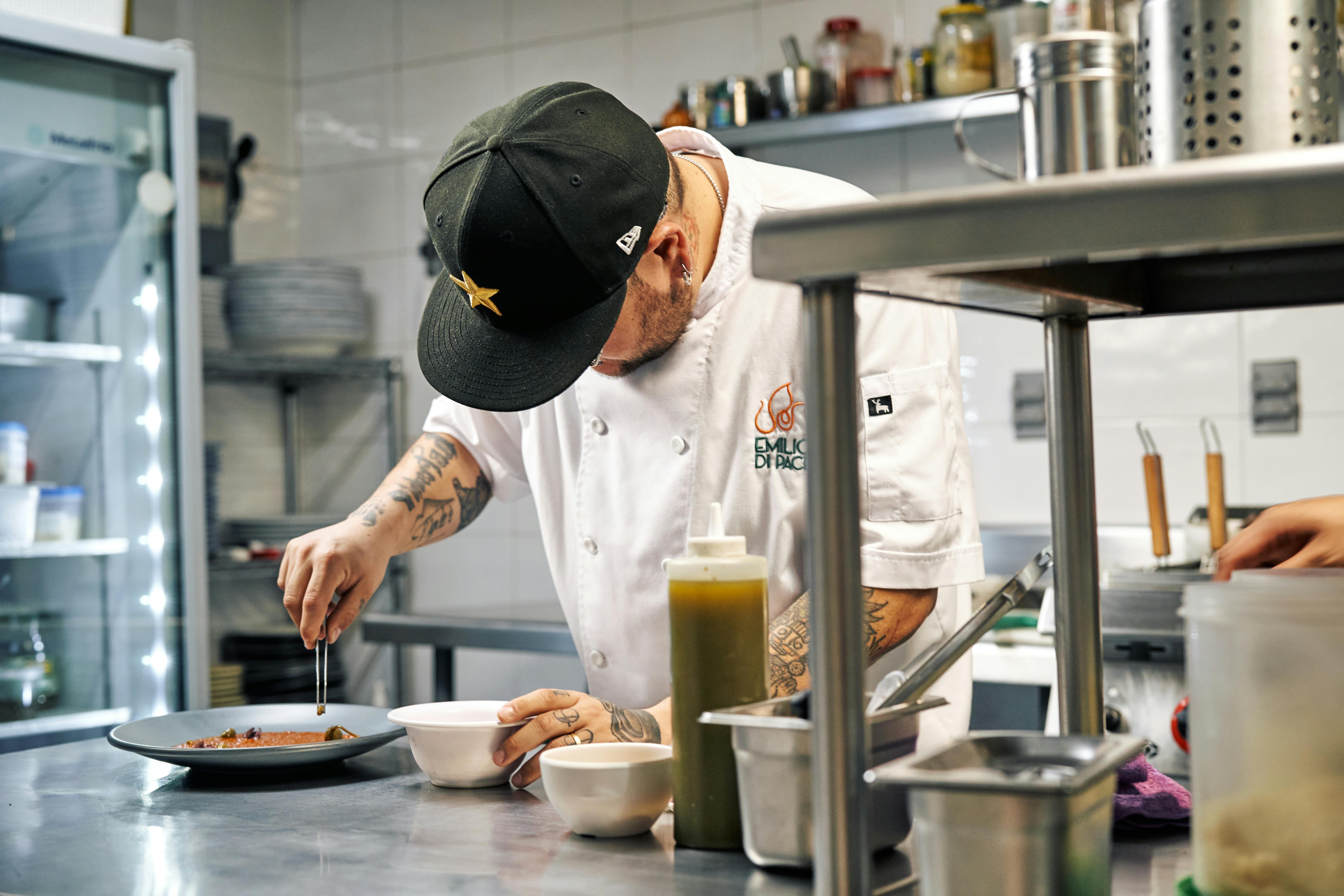
Chef Mona Jackson runs the only kitchen inside Read’s Artspace, a sprawling artist community in downtown Bridgeport where painters and writers fill most of the studios. She jokes about it freely. But inside that kitchen, the work is serious.
Students move from station to station, prepping vegetables, checking ovens and managing simmering pots. Red baskets of fresh produce line the counters. Knives chop, timers go off and Jackson calls out instructions across the noise, guiding hands and keeping the flow moving. When students bump into each other while finding their rhythm, she laughs along with them. The chaos, she knows, is part of the lesson.
Jackson’s Cook and Grow program uses cooking and gardening to take on what she sees as overlapping problems for Bridgeport’s young people: heavy reliance on fast food, limited nutrition knowledge and a shortage of basic life skills. The program connects a working garden to a real kitchen, asking students to grow vegetables and herbs and then cook with what they harvest.
The idea did not come from a curriculum or a grant application. It came from watching kids.
Jackson grew up in Norwalk, spending long hours in her father’s catering and cleaning business. She learned to cook young, tasted everything he made and earned her way out of the kitchen only after it was clean. That foundation carried her through more than 25 years as a professional chef. She also worked as a paralegal and opened her own Panini Café, which she eventually had to close during the economic crash.
That period shifted something for her. “So when the economy crashed, I started noticing kids,” she said. “I started noticing kids at a young age struggling with their health and confidence. They couldn’t run as easily, and it was affecting how they felt about themselves.”
Those observations became the foundation of Cook and Grow.
Part of what Jackson wants students to experience is the physical difference between food grown in the ground and food pulled from a package. A cucumber from the garden, she argues, does not taste like a cucumber from a store shelf. Neither does a tomato. She builds those comparisons directly into her lessons, letting students taste the gap themselves rather than simply explaining it.
The curriculum stretches well beyond produce identification. Students learn how to read nutrition labels, how to shop on a budget and how to think critically about the economics behind their food choices. Jackson also treats cooking as a way into cultural literacy. One session might focus on Tuscan vegetables. The next might draw from a different part of the world entirely. The goal is to push students past the idea that any cuisine belongs exclusively to any group. “To taste other cultures’ food and not get stuck on because I’m Black or I’m Hispanic,” she said.
The kitchen also teaches accountability in a way that few classrooms can replicate. Measurements matter. A mistake with seasoning or baking does not produce a bad grade. It produces a bad dish, right in front of everyone. Jackson is direct about that reality with her students.
Bridgeport has long faced significant public health challenges, including elevated rates of childhood obesity and limited access to fresh food in many of its neighborhoods. Programs like Cook and Grow operate outside the school day and outside the traditional school building, trying to fill gaps that formal education does not always reach.
Jackson’s position inside Read’s Artspace puts her among painters, sculptors and writers, and she is clear-eyed about what that means for her own work. Cooking is her medium. The kitchen is her studio. What comes out of it, she hopes, is something her students carry far longer than any single recipe.
The spring growing season puts the program’s garden back in motion in the weeks ahead, which means fresh ingredients will soon be moving from the soil to the counters where students are learning to use them. For Jackson, that cycle is the point. Grow it, cook it, understand it. Then do it again.